
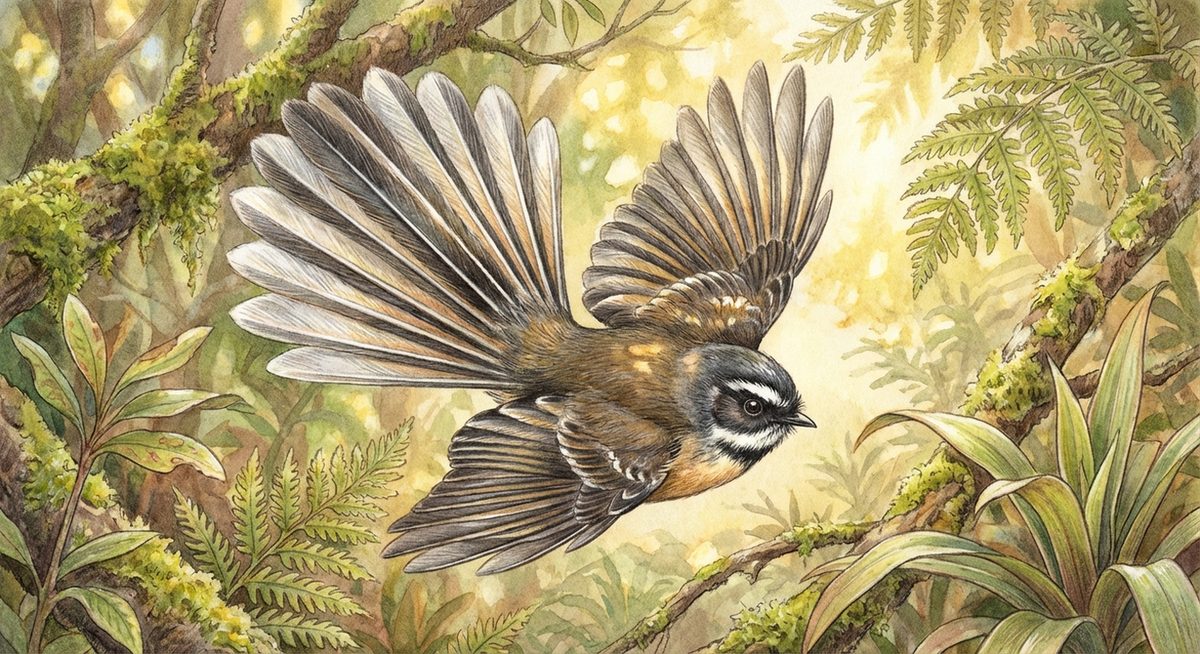
The piwakawaka (fantail) is one of New Zealand’s most beloved and recognisable birds – a tiny, friendly creature whose curious nature and beautiful fanned tail have inspired artists and captured hearts throughout Aotearoa.
The piwakawaka, also known as the fantail (Rhipidura fuliginosa), is one of New Zealand’s most charming native birds. Instantly recognisable by its distinctive fan-shaped tail, energetic movements, and fearless curiosity around humans, the piwakawaka holds a special place in both Maori culture and contemporary New Zealand art and design.
Key Facts About the Piwakawaka
- Maori Name: Piwakawaka
- English Name: New Zealand Fantail
- Scientific Name: Rhipidura fuliginosa
- Size: 16 cm (including tail)
- Weight: Just 8 grams
- Conservation Status: Not threatened
- Colour Forms: Pied (common) and black (rare, mainly South Island)
The Distinctive Fantail Look
The piwakawaka is unmistakable thanks to its spectacular fanned tail, which can spread to display up to twelve feathers in a beautiful arc. This tail is constantly in motion as the bird flits and dances through the air catching insects.
Two Colour Forms
New Zealand fantails come in two colour forms. The pied form is most common – a delicate combination of grey, brown, white, and black with distinctive white eyebrows. The black form, known as a “melanistic” fantail, is entirely dark brown or black and is more common in the South Island, making up about 5% of the population there.
Despite their bold personality, piwakawaka are tiny birds – weighing only about 8 grams, roughly the weight of a single AAA battery. Their small size combined with their acrobatic flying style makes them a delight to watch.
Friendly and Fearless
The piwakawaka is famous for its friendly, curious nature. Unlike many wild birds, fantails show little fear of humans and will often approach people closely – sometimes landing just metres away or even following walkers through the bush.
Why Do Fantails Follow People?
This behaviour isn’t actually friendliness (though it feels like it!). Fantails are insectivores and have learned that humans walking through vegetation disturb insects, making them easy to catch. The fantail follows behind, expertly snapping up flies, moths, and other small insects flushed out by our movement.
Acrobatic Hunters
Watching a piwakawaka hunt is mesmerising. They perform incredible aerial acrobatics – twisting, diving, and changing direction mid-flight with remarkable agility. Their fanned tail acts like a rudder, enabling sudden turns and stops to catch insects on the wing.
Piwakawaka in Maori Culture
In Maori tradition, the piwakawaka carries significant spiritual meaning, though interpretations vary between iwi (tribes) and regions.
Messenger Between Worlds
Many Maori consider the piwakawaka to be a messenger from the spirit world. When a fantail enters a house or follows a person persistently, it may be seen as an ancestor or spirit attempting to communicate. This can be interpreted as a warning, a blessing, or simply a visit from a departed loved one.
Different Interpretations
The meaning of a piwakawaka encounter varies. Some traditions view the bird as a bringer of death – if one enters your house, it may foretell a death in the family. Others see the fantail as a guardian or positive messenger. Context and personal belief guide interpretation. Most modern Kiwis simply enjoy the bird’s friendly presence.
Origin Story
According to one Maori legend, the piwakawaka got its markings from Maui, the legendary demigod. When Maui was trying to win immortality for humanity by passing through the goddess of death (Hine-nui-te-po), the piwakawaka’s laughter woke her and doomed his quest. Maui threw muddy water at the bird in anger, creating the fantail’s distinctive markings.
Piwakawaka in New Zealand Art
The piwakawaka’s distinctive silhouette and charming personality have made it a favourite subject for New Zealand artists. From traditional Maori carving to contemporary prints, the fantail appears throughout NZ art and design.
Contemporary Artists
Many of New Zealand’s most loved artists feature the piwakawaka in their work. Flox (Hayley King) creates bold, graphic fantail prints that have become iconic in NZ homes. Irina Velman captures the bird’s whimsical character in delicate illustrations, while Glenn Jones adds his signature Kiwi humour to fantail artwork.
Jewellery and Accessories
The fantail’s elegant form translates beautifully into jewellery design. Silver fantail pendants and earrings are popular choices, often featuring the distinctive fanned tail. Designers like Boh Runga draw inspiration from native birds including the fantail for their nature-inspired collections.
Homewares and Gifts
From tea towels to cushion covers, ceramics to greeting cards, the piwakawaka appears across New Zealand homewares. Brands like Wolfkamp & Stone feature fantails in their popular homeware range. These items make perfect Kiwiana gifts – recognisably NZ and full of charm.
Where to See Piwakawaka
The good news is that fantails are common throughout New Zealand – you don’t need to travel far to encounter one.
Habitat
Piwakawaka thrive in native bush, regenerating forest, parks, gardens, and even urban backyards with enough vegetation. They’re adaptable birds that have coped well with human settlement, unlike many of New Zealand’s native species.
Best Viewing Tips
- Walk quietly: Fantails are attracted to movement but may be startled by loud noises
- Visit native bush: Forest trails are excellent for fantail encounters
- Dawn and dusk: Active feeding times when insects are plentiful
- Plant native: Gardens with native plants attract fantails and their insect prey
Fantail Conservation
Unlike many of New Zealand’s native birds, the piwakawaka is not currently threatened. Their adaptability, willingness to live alongside humans, and ability to produce multiple broods per season have helped them maintain healthy populations.
Helping Piwakawaka Thrive
- Pest control: Trapping rats and stoats protects nests
- Native planting: Creates habitat for insects (fantail food)
- Cat management: Keep cats inside, especially at dawn and dusk
- Avoid pesticides: Chemicals reduce insect populations
While fantails are doing well overall, predator control remains important. Rats, stoats, and cats can devastate nests, and supporting local conservation efforts helps protect this beloved bird for future generations.
Discover NZ Native Bird Art
Explore beautiful artwork celebrating the fantail and other native birds in our NZ Art Prints Guide.