
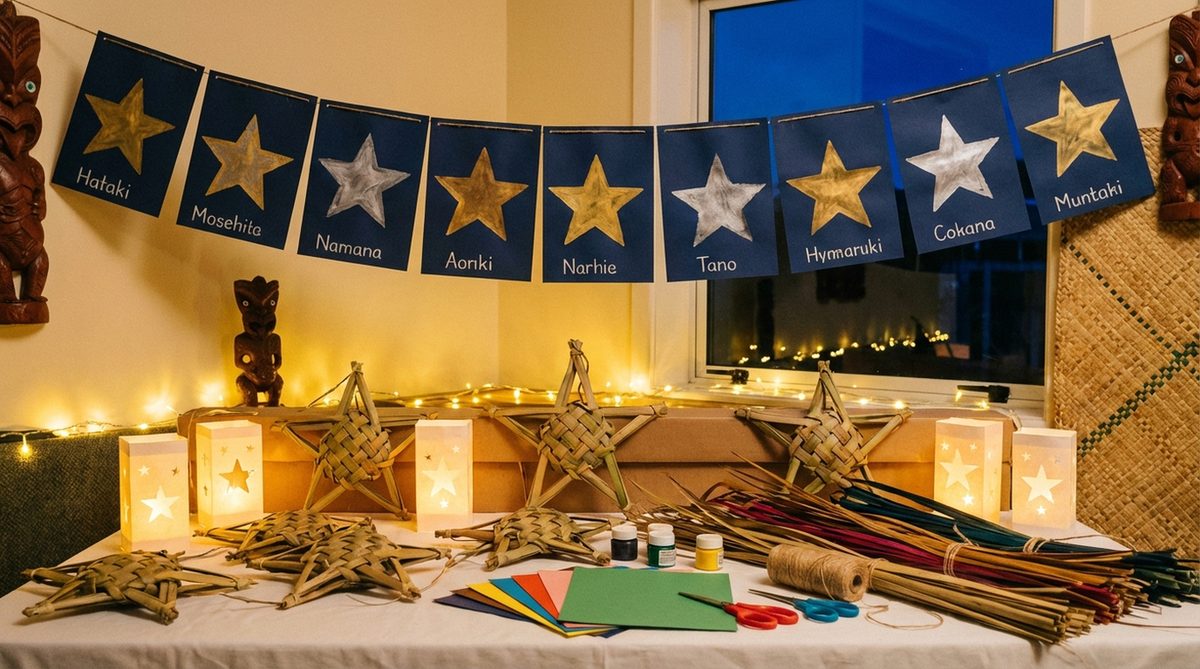
Celebrate Matariki through creative crafts – honour the Maori New Year with handmade stars, traditional designs, and meaningful creations.
Matariki, the Maori New Year, has become one of New Zealand’s most celebrated occasions. Marked by the rising of the Matariki star cluster (Pleiades) in late June or early July, this is a time for remembering ancestors, celebrating the present, and planning for the future. Crafts are a wonderful way to engage with Matariki – creating meaningful objects while learning about this significant cultural celebration.
Understanding Matariki
Matariki is a cluster of nine stars visible in the New Zealand sky during winter. For Maori, the appearance of these stars signals the start of a new year – a time for gathering with whanau (family), reflecting on those who have passed, and setting intentions for the year ahead.
The Nine Stars of Matariki
- Matariki: The mother star, connected to health and wellbeing
- Pohutukawa: Connects us to those who have passed
- Tupu-a-nuku: Associated with food grown in the ground
- Tupu-a-rangi: Connected to food from above (birds, trees)
- Waipuna-a-rangi: Associated with rain and fresh water
- Waitī: Connected to the sea and food from water
- Waitā: Associated with fresh water
- Ururangi: Connected to winds
- Hiwa-i-te-rangi: The wishing star for future aspirations
Learn more about Matariki traditions in our Matariki gifts guide.
Star-Making Crafts
The nine stars of Matariki provide natural inspiration for crafts. Creating stars is a meaningful way to honour each star and their significance.
Harakeke (Flax) Stars
Traditional Maori star weaving uses harakeke (New Zealand flax). This beautiful craft creates intricate woven stars that can be hung as decorations. Many community centres and museums offer weaving workshops during Matariki. Start with simple two-strip stars before progressing to more complex multi-pointed designs.
Paper Stars
Folded paper stars are accessible for all ages. Use metallic or dark blue paper with silver accents to capture the night sky feel. Create nine stars – one for each Matariki star – and label them to learn their names and meanings.
Yarn Stars
God’s eye-style yarn stars are easy to make with sticks and wool. Wind yarn around crossed sticks to create colourful star shapes. Use colours significant to Matariki – blues for the sky, greens for earth, and golds for stars.
Clay Stars
Air-dry clay or salt dough stars can be stamped with patterns, painted, and hung as ornaments. Press Maori-inspired designs like koru patterns into the clay before drying. See our guide on koru meaning for design inspiration.
Matariki Lanterns
Lanterns represent the stars lighting the winter sky. Community lantern festivals have become a popular way to celebrate Matariki together.
Jar Lanterns
Transform glass jars into star-themed lanterns. Paint with glass paint, cover with tissue paper, or wrap with wire and beads. Place LED tea lights inside (never real candles in children’s crafts) for a safe, glowing effect.
Paper Lanterns
Simple paper bag luminaries or more complex folded paper lanterns create atmospheric lighting. Cut star shapes into the paper to let light shine through. Decorate with Maori patterns and constellation designs.
Willow Lanterns
For more ambitious crafters, willow or wire-framed lanterns covered with tissue paper create stunning large-scale decorations. Many Matariki festivals feature community lantern-making workshops leading up to nighttime parades.
Traditional Maori Crafts
Matariki is an opportunity to engage respectfully with traditional Maori arts and crafts.
Kowhaiwhai Patterns
Kowhaiwhai are traditional painted scroll patterns found in meeting houses. Create kowhaiwhai-inspired art using the flowing, curvilinear designs. Use red, white, and black – traditional Maori colours – or adapt with Matariki-themed blues and golds.
Whai (String Games)
String games are a traditional Maori pastime. Learn to make star shapes with string – the perfect activity for Matariki. Many tutorials teach simple figures that can be mastered in minutes, progressing to complex patterns.
Poi Making
Poi are traditional Maori performance tools. Making simple poi from fabric balls and cord is an accessible craft. Once made, learn basic poi movements – a wonderful physical and cultural activity.
Matariki Crafts for Children
Age-appropriate activities help tamariki (children) understand and engage with Matariki celebrations.
Easy Crafts for Kids
- Star painting: Paint nine stars on dark paper, learning each name
- Constellation collage: Glue stars to black card to recreate Matariki cluster
- Kite making: Simple diamond kites decorated with Matariki themes
- Handprint art: Create star shapes using handprints
- Seed planting: Plant seeds to honour new growth at new year
- Gratitude cards: Write thanks for the year past
For more children’s activity ideas, see our NZ children’s gifts guide and explore te reo Maori toys.
Where to Find Matariki Craft Supplies
Craft Stores
Spotlight, Lincraft, and Warehouse Stationery stock general craft supplies. During Matariki season, look for themed craft kits and speciality supplies. Many stores create Matariki displays with relevant materials.
Cultural Centres
Museums like Te Papa and Auckland Museum host Matariki workshops with materials provided. Local marae and cultural centres may offer weaving or traditional craft classes.
Schools & Libraries
Many schools run Matariki craft activities, and public libraries often host free craft sessions during the Matariki period. Check your local library’s event calendar.
Online Resources
Te Papa’s website and NZ education sites offer free printable Matariki craft templates. Pinterest and YouTube have countless Matariki craft tutorials for all skill levels.
Matariki Craft Events
Joining community craft events makes Matariki celebrations even more special.
Lantern Festivals
Auckland, Wellington, and other centres host Matariki lantern festivals. Many include lantern-making workshops where you can create your own before joining the nighttime procession.
Museum Programs
Te Papa, Auckland Museum, Canterbury Museum, and regional museums run extensive Matariki programs including craft workshops for all ages.
Community Workshops
Local councils, libraries, and community centres organise Matariki events throughout June and July. Check your local council website for listings.