
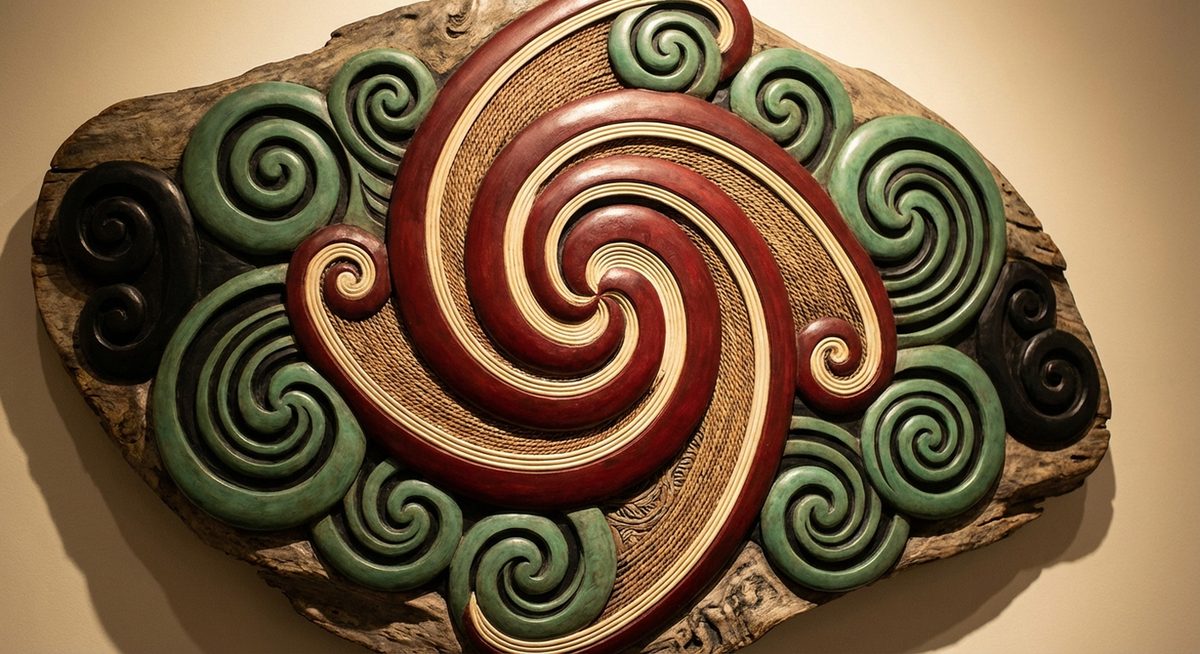
The koru is one of the most recognisable symbols in Maori art – a graceful spiral representing new life, growth, and the eternal cycle of renewal that connects all living things.
The koru is a spiral shape inspired by the unfurling frond of the native New Zealand silver fern (ponga). In Maori culture, this elegant motif carries profound meaning – symbolising new beginnings, growth, strength, and peace. Today, the koru has become one of New Zealand’s most iconic symbols, appearing in everything from traditional carving to modern logos.
Understanding the Koru
- Origin: Inspired by the unfurling silver fern frond
- Primary Meaning: New life, growth, regeneration
- Additional Meanings: Peace, tranquility, spirituality, new beginnings
- Art Form: Central element in kowhaiwhai (painted patterns)
- Modern Usage: Air New Zealand logo, NZ art, jewellery, tattoo
The Silver Fern Connection
The koru takes its form from the young, tightly coiled frond of the silver fern (Cyathea dealbata), known in Maori as ponga or kaponga. As the fern grows, the frond gradually unfurls, revealing its full size and complexity – a perfect natural metaphor for growth and development.
Why the Silver Fern?
The silver fern is unique to New Zealand and has deep cultural significance. Its distinctive silver underside was traditionally used by Maori to mark forest trails at night – the pale colour reflecting moonlight to guide travellers safely home. This connection to guidance and safe passage adds another layer of meaning to the koru symbol.
The circular, inward-coiling shape of the young frond represents the idea of returning to the point of origin. In Maori philosophy, this reflects the belief that all things are connected and that life moves in cycles rather than straight lines.
Spiritual Significance in Maori Culture
In te ao Maori (the Maori world), the koru embodies several interconnected concepts that are central to understanding life and relationships.
New Life and Beginnings
The unfurling frond represents new life emerging. Just as the fern pushes through the forest floor and slowly opens to the light, the koru symbolises the potential within all new beginnings – whether birth, a new relationship, or a fresh start in life.
Growth and Strength
The koru’s spiral form suggests continuous growth and development. Unlike a closed circle, the spiral has no end – it represents perpetual movement forward while staying connected to its origins. This makes the koru a powerful symbol for personal growth and inner strength.
Peace and Tranquility
The gentle, flowing curves of the koru evoke a sense of calm and harmony. The shape suggests movement without aggression – a peaceful unfurling rather than a forceful push. This association with tranquility makes the koru popular in contexts where peace and wellbeing are emphasised.
Koru in Traditional Maori Art
The koru is a fundamental element in kowhaiwhai – the traditional painted scroll patterns found on the rafters of meeting houses (wharenui), on canoes (waka), and in other significant spaces.
Kowhaiwhai Patterns
In kowhaiwhai, koru patterns are typically painted in red, black, and white. These colours carry their own significance:
- Red (kokowai): Represents life force, high birth, and protection
- Black: Symbolises the potential of creation and the void from which all life emerges
- White: Represents purity, light, and the spiritual realm
Whakairo (Carving)
The koru also appears in traditional wood carving, bone carving, and stone carving. In these contexts, multiple koru often intertwine to represent family connections and the relationships between ancestors, present generations, and those yet to come.
Double and Triple Koru
Multiple koru designs carry specific meanings. A double koru often represents a partnership or relationship – two lives intertwined yet individually growing. A triple koru can symbolise family: parents and child, or the connection between past, present, and future generations.
The Koru in Modern New Zealand
Today, the koru has transcended its traditional context to become a symbol of New Zealand itself. Its elegant form and meaningful associations have made it popular across many aspects of contemporary Kiwi life.
Air New Zealand
Perhaps the most famous modern use of the koru is in Air New Zealand’s logo. The stylised koru, designed in 1973, appears on aircraft and represents the national carrier’s connection to New Zealand culture and identity.
Jewellery and Art
The koru is extremely popular in New Zealand jewellery, particularly in pounamu (greenstone) and bone carving. Artists like Nick von K incorporate koru motifs into contemporary jewellery designs, while traditional carvers continue to create koru pendants using centuries-old techniques.
Contemporary artists across all mediums draw on koru imagery. From Flox’s bold graphic works to the elegant patterns of Wolfkamp & Stone, the koru continues to inspire new interpretations.
Ta Moko and Kirituhi
The koru is a common element in ta moko (traditional Maori tattoo) and kirituhi (Maori-inspired tattoo for non-Maori). Within these art forms, koru patterns tell personal stories of heritage, growth, and transformation.
Wearing and Gifting Koru
Koru designs make meaningful gifts that carry positive wishes for the recipient.
When to Gift Koru
- New baby: Symbolises the new life and their potential
- Graduation: Represents growth and new beginnings
- New job or venture: Wishes for continued growth and success
- Recovery: Represents renewal and regeneration
- Wedding: Double koru symbolises two lives intertwined
When choosing a koru piece, consider whether you want a traditional design carved in pounamu or bone, or a contemporary interpretation in silver or gold. Each material carries its own significance and aesthetic appeal.
Explore Maori Symbols
Learn about other meaningful Maori patterns in our guide to Mangopare – The Hammerhead Shark Pattern and discover the significance of pounamu greenstone.