
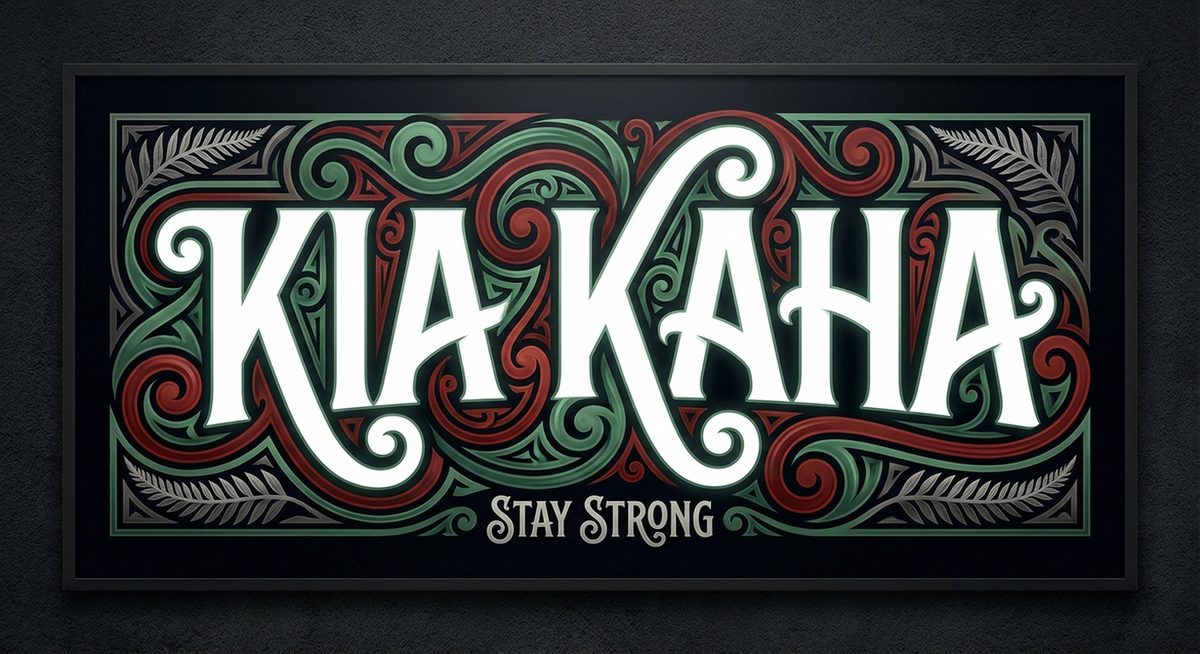
Kia Kaha is more than just a phrase – it’s a deeply meaningful expression of encouragement, strength, and solidarity that has become one of New Zealand’s most beloved Maori sayings.
Kia Kaha (pronounced “kee-ah kah-ha”) is a Maori phrase meaning “be strong” or “stay strong.” Simple yet powerful, these two words have become one of New Zealand’s most recognised expressions – used in times of hardship, celebration, and everyday encouragement. For Kiwis around the world, Kia Kaha embodies the spirit of resilience and community that defines Aotearoa.
Kia Kaha at a Glance
- Pronunciation: KEE-ah KAH-ha
- Translation: Be strong / Stay strong / Forever strong
- Language: Te reo Maori
- Usage: Encouragement, solidarity, support
- Related Phrases: Kia maia (be brave), Kia manawanui (be steadfast)
The Deep Meaning of Kia Kaha
While the direct translation of Kia Kaha is “be strong,” its meaning in te ao Maori (the Maori world) encompasses much more than physical strength. The word kaha can mean strength, energy, intensity, or ability – suggesting a holistic kind of resilience that includes mental, emotional, and spiritual fortitude.
Breaking Down the Phrase
Kia is a particle that indicates a wish, desire, or command – similar to “let it be” or “may you be.” Kaha means strength, power, or energy. Together, Kia Kaha expresses a wish or encouragement for someone to be strong – but carries the warmth of genuine care and connection.
Collective Strength
In Maori culture, strength is often understood as a collective quality rather than purely individual. Kia Kaha acknowledges that we draw strength from our whanau (family), our community, and our connections to each other. When someone says Kia Kaha, they’re often implying: “You are not alone – we stand with you.”
Kia Kaha in Modern New Zealand
Kia Kaha has transcended its traditional context to become part of everyday New Zealand English. You’ll hear it in sports stadiums, workplaces, schools, and homes across the country. It has become a unifying phrase that connects all New Zealanders, regardless of heritage.
Sporting Events
The phrase is particularly associated with rugby and New Zealand sports culture. The All Blacks and other NZ teams often receive Kia Kaha as encouragement from supporters. It embodies the team spirit and determination that Kiwis pride themselves on.
Times of Crisis
Kia Kaha has become especially significant during national tragedies and challenges. After the Christchurch earthquakes in 2010-2011, the phrase became a rallying cry for the city and nation. Following the 2019 Christchurch mosque shootings, Kia Kaha appeared on buildings, banners, and social media as a message of solidarity and support.
Kia Kaha Christchurch
The “Kia Kaha Christchurch” movement after the earthquakes showed how the phrase could unite a community in recovery. Businesses, organisations, and individuals adopted the phrase as a symbol of resilience and determination to rebuild. It demonstrated the power of these simple words to provide comfort and strength.
Everyday Encouragement
Beyond major events, Kia Kaha is used in daily life – encouraging a friend through a difficult time, wishing someone luck before an exam, or simply signing off an email with warmth and support. Its versatility makes it a natural part of New Zealand expression.
Related Maori Phrases of Encouragement
Kia Kaha is part of a family of encouraging Maori expressions. Understanding these related phrases provides deeper insight into Maori values around strength and perseverance.
Phrases of Strength
- Kia maia: Be brave / Be courageous
- Kia manawanui: Be steadfast / Be patient / Have a big heart
- Kia kaha, kia maia, kia manawanui: Be strong, be brave, be steadfast (complete encouragement)
- Tukua kia rere: Let it fly / Set yourself free
- Whaia te iti kahurangi: Seek the treasure you value most dearly
The Complete Encouragement
The full phrase “Kia kaha, kia maia, kia manawanui” is often used in more formal contexts or when someone needs significant support. It encompasses physical strength (kaha), courage (maia), and patient endurance (manawanui) – a complete wish for resilience in all its forms.
Kia Kaha in Art and Design
The phrase Kia Kaha has inspired countless New Zealand artists and designers. Its powerful meaning and visual appeal make it popular for typography-based art, jewellery, and home decor.
Typography and Prints
Many NZ artists create beautiful Kia Kaha prints and posters. These range from simple typographic designs to elaborate illustrations incorporating Maori patterns like the koru. Artists like Glenn Jones and Flox incorporate te reo Maori phrases into their distinctly Kiwi artwork.
Jewellery
Kia Kaha appears on pendants, bracelets, and rings – often combined with traditional symbols like the koru or pounamu. These pieces make meaningful gifts that carry both cultural significance and personal encouragement.
Homewares and Gifts
From cushion covers to tea towels, Kia Kaha features across New Zealand homewares. Brands like Moana Road incorporate the phrase into their Kiwiana-style products, making it easy to bring this meaningful message into everyday life.
Using Kia Kaha Respectfully
While Kia Kaha has become part of mainstream New Zealand English, it remains a Maori phrase with cultural significance. Using it respectfully means understanding its meaning and context.
When to Use Kia Kaha
- Encouragement: Wishing someone strength before a challenge
- Solidarity: Showing support during difficult times
- Celebration: Cheering on sports teams or achievements
- Farewell: A warm sign-off in messages and letters
Pronunciation Matters
Taking care to pronounce Kia Kaha correctly shows respect for te reo Maori. The emphasis falls on the first syllable of each word: KEE-ah KAH-ha. The ‘a’ sounds are open, like in “father,” not closed like in “cat.”
Explore Te Reo Maori
Discover more meaningful Maori phrases in our guide to Maori Whakatauki – Traditional Proverbs and Their Meanings.