
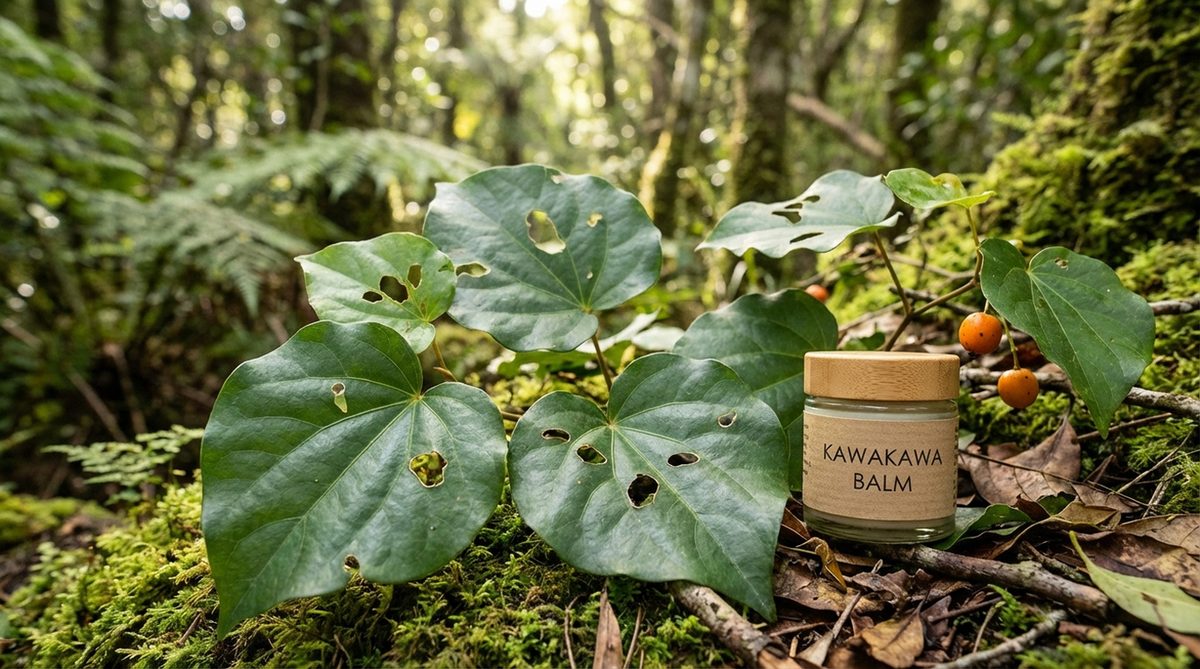
Discover kawakawa – New Zealand’s remarkable native plant used in traditional Maori medicine and modern natural skincare.
Kawakawa (Piper excelsum) is one of New Zealand’s most treasured native plants. Used for centuries in Maori rongoā (traditional medicine), kawakawa has powerful healing properties that modern science is now confirming. Today, this remarkable plant appears in natural skincare, herbal teas, and wellness products that celebrate traditional knowledge.
What is Kawakawa?
Kawakawa is a small tree or shrub native to New Zealand, growing throughout the North Island and upper South Island. Its heart-shaped leaves are its most distinctive feature – often peppered with holes made by the kawakawa looper moth caterpillar, which some say indicates a healthy, potent plant.
Kawakawa Key Facts
- Scientific Name: Piper excelsum (also Macropiper excelsum)
- Maori Name: Kawakawa
- Family: Piperaceae (pepper family)
- Native Range: New Zealand endemic
- Growth: Small tree to 3-6 metres
- Distinctive Feature: Heart-shaped leaves, often with insect holes
Kawakawa in Maori Tradition
Rongoā Maori (Traditional Medicine)
Kawakawa holds an important place in rongoā Maori – the traditional healing practices of the Maori people. Different parts of the plant served different purposes:
- Leaves: Chewed for toothache, made into poultices for skin conditions
- Bark: Used in healing preparations
- Berries: The orange fruit was eaten and also used medicinally
Cultural Significance
Beyond medicine, kawakawa holds cultural significance. Its leaves were worn at tangihanga (funerals) and used in various ceremonies. The plant represents healing, protection, and connection to the land.
Respecting Traditional Knowledge
When purchasing kawakawa products, consider supporting brands that acknowledge and respect Maori traditional knowledge. Some companies work directly with iwi (tribes) or contribute to Maori communities.
Kawakawa Healing Properties
Modern research is confirming what Maori have known for centuries – kawakawa has genuine therapeutic benefits.
Documented Benefits
- Anti-inflammatory: Reduces inflammation and swelling
- Antibacterial: Helps fight bacterial infections
- Analgesic: Provides natural pain relief
- Antioxidant: Protects against cellular damage
- Digestive: Traditionally used for stomach ailments
Active Compounds
Kawakawa leaves contain myristicin, diayangambin, and other compounds that contribute to its healing effects. These bioactive substances are being studied for various medicinal applications.
Kawakawa Products in NZ
Kawakawa Balm
The most popular kawakawa product, healing balms combine kawakawa extract with beeswax and carrier oils. These multi-purpose balms soothe dry skin, minor cuts, insect bites, and skin irritations. Anoint Skincare from Akaroa creates exceptional kawakawa balm products using traditional methods.
Skincare Products
Kawakawa appears in moisturisers, serums, and cleansers. Its anti-inflammatory properties make it excellent for sensitive or problem skin. Many NZ natural skincare brands incorporate kawakawa as a key ingredient.
Kawakawa Tea
Dried kawakawa leaves make a distinctive herbal tea with a slightly peppery taste. Traditionally used for digestive comfort and general wellness, kawakawa tea is caffeine-free and can be enjoyed hot or cold.
Kawakawa Oil
Essential oil and infused oils capture kawakawa’s therapeutic properties in concentrated form. These can be used for massage, aromatherapy, or added to bath products.
Bath & Body Products
Kawakawa features in soap bars, bath salts, and body products. See our bath and body guide for more natural NZ products.
NZ Kawakawa Brands
Discover New Zealand brands creating quality kawakawa products.
Featured Brands
- Anoint Skincare – Beautiful kawakawa balms and skincare from Banks Peninsula
Choosing Quality Products
Look for brands that:
- Use genuine NZ-grown kawakawa
- Employ traditional extraction methods
- Combine with quality natural ingredients
- Acknowledge Maori traditional knowledge
- Practice sustainable harvesting
How to Use Kawakawa Products
Kawakawa Balm Uses
- Dry Skin: Apply to hands, elbows, heels, lips
- Minor Cuts: Cleanse wound, apply thin layer
- Insect Bites: Soothes itching and inflammation
- Eczema: May help calm irritated skin (patch test first)
- Nappy Rash: Gentle enough for babies
- After Sun: Soothes mild sunburn
Making Kawakawa Tea
Use 3-5 fresh or dried leaves per cup. Pour boiling water over leaves and steep for 5-10 minutes. The tea has a mild, slightly peppery flavour. Add honey if desired.
Safety Considerations
Kawakawa is generally safe for external use. For internal use (tea), moderate consumption is recommended. Pregnant or breastfeeding women should consult healthcare providers before using kawakawa internally. Always patch test new skincare products.
Growing Kawakawa at Home
Garden Requirements
Kawakawa thrives in shaded or semi-shaded positions, making it perfect for under trees or on the south side of buildings. It prefers moist, well-drained soil and protection from strong winds.
Planting Tips
- Choose a sheltered, shady spot
- Enrich soil with compost
- Water regularly until established
- Mulch to retain moisture
- Protect from frost when young
Harvesting Leaves
Pick leaves as needed once the plant is established. The leaves with caterpillar holes are traditionally considered most potent. Harvest sustainably, taking only what you need and never stripping a plant bare.